

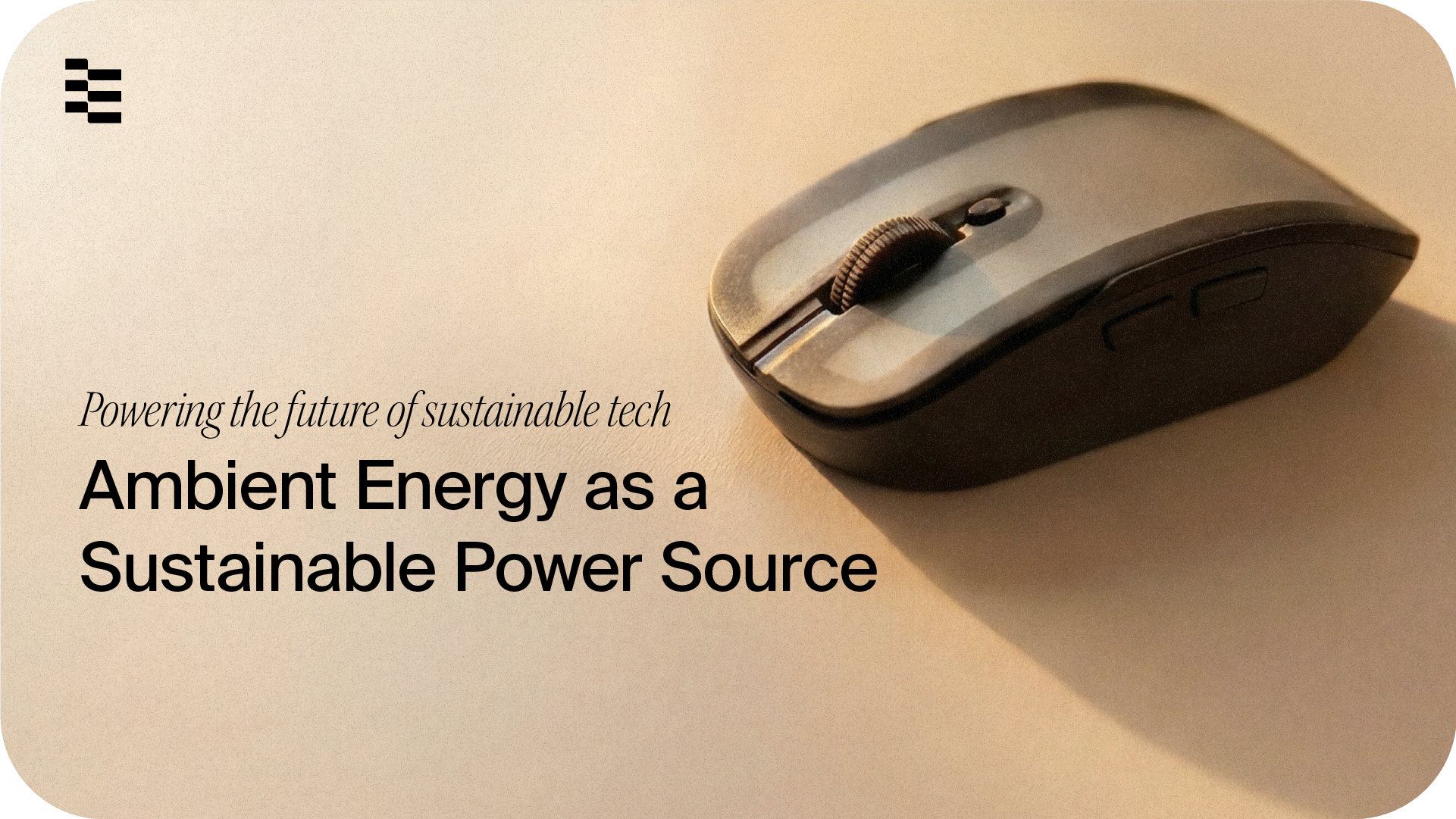
Ambient Energy as a Sustainable Power Source
Every day vast amounts of energy surround us. From sunlight and movement to heat and wireless signals. For decades, this background power has been ignored. Today, new technologies make it possible to capture and convert ambient energy into usable electricity, enabling the next generation of sustainable electronics without disposable batteries or power cables.
But what exactly is ambient energy, and how can it be used as a sustainable power source?
What is Ambient Energy?
Ambient energy refers to the naturally occurring energy present in our environment, such as light, heat, motion, and radio waves. Although these energy sources are often low in intensity, they can still be harvested and converted into usable electricity. This process has several names but is commonly referred to as ambient energy harvesting, power harvesting, or energy scavenging.
Ambient Light as a Power Source
While ambient energy can come from several sources, ambient light has become particularly valuable for indoor applications. Buildings contain predictable light sources through LED lighting, fluorescent lighting, and indirect daylight. Instead of allowing this energy to go unused, indoor photovoltaic technology can capture ambient light and convert it into electricity for low-power devices.
Indoor photovoltaic (IPV) cells work according to the same fundamental principles as outdoor solar cells. The key difference is the type and intensity of light they are designed to capture. Epishine develops and manufactures indoor solar cells with specialized material structures that enhance their ability to efficiently absorb low indoor light levels, down to single-digit lux.
While indoor solar cells are not designed to generate kilowatts of power like traditional solar panels, they are highly effective for micro-scale power generation in various applications. Epishine’s indoor solar cells can generate up to 22 µW/cm², making them ideal for powering indoor devices such as asset trackers, remote controls, electronic shelf labels, and wireless sensors.
The Benefits of Using Ambient Light as a Power Source
Embracing this technology provides several powerful advantages that extend far beyond mere convenience.
Sustainable tech
Traditional single-use batteries are fraught with environmental hazards, from the mining of lithium and cobalt to the toxic waste created when they are improperly discarded in landfills. Energy harvesting provides a sustainable alternative to these disposable batteries. Epishine’s photovoltaic cells consist of organic materials and have a low environmental footprint, emitting only 21 g of CO₂e per cell1. With a service life of up to 10 years under standard operating conditions2, the technology can significantly reduce electronic waste while lowering maintenance requirements.
Lower total cost of ownership (TCO)
Energy harvesting is not just a sustainability narrative, it is also a logistical advantage. A deployment of 50,000 battery-powered electronic shelf labels requires continuous battery replacements across every store, every year. This creates ongoing labor, logistics, waste, and replacement costs.
Fleets of self-powered devices powered by ambient indoor light remove that maintenance loop entirely.
Enhanced Reliability
Batteries inevitably die, often at the most inconvenient times. A device powered by environmental energy, especially one backed by a supercapacitor, can operate for years with minimal or no maintenance.
Ambient Energy Market Growth
The demand for self-sustaining electronics is growing rapidly. The global ambient energy harvesting market is experiencing strong growth as semiconductor technology becomes increasingly energy efficient. At the same time, energy harvesting technologies are becoming better at capturing and converting low levels of ambient energy into usable electricity. Together, these developments are enabling new innovations across industries such as consumer wearables, electronic shelf labels, asset tracking, and industrial automation.
By continuing to explore ambient energy and refine our methods for capturing it, we are not just solving the logistical challenges associated with battery replacement. We are building a truly sustainable technological ecosystem — one that powers itself quietly, efficiently, and endlessly from the world around us.
1 Result based on independent LCA report of our LEH3 product, and product improvements implemented since then, for a solar cell producing 400µW at 500lux.
2 See our datasheet for standard operating conditions.