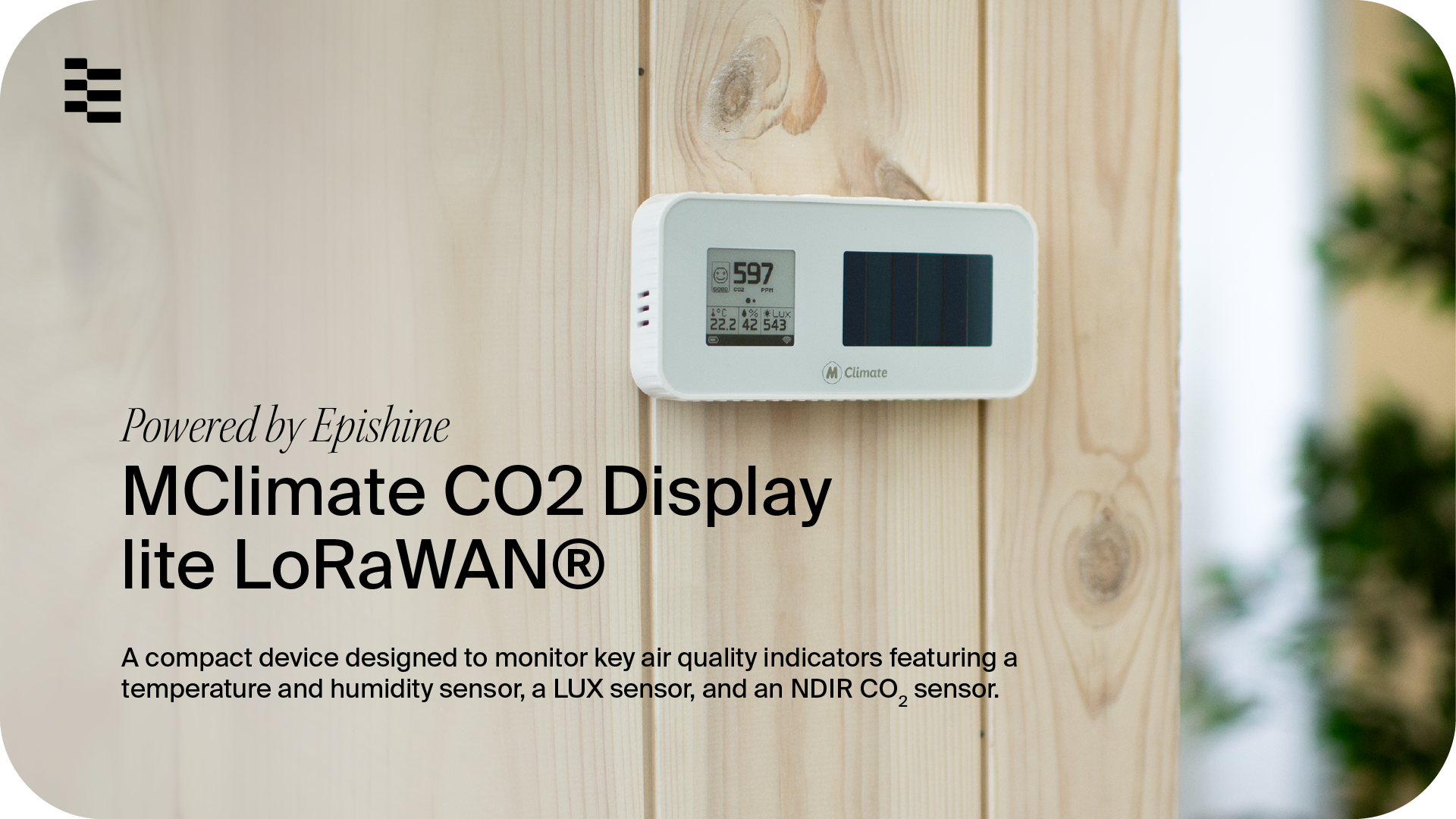
The LIFE SUNRISE project has reached its conclusion after four years of developing, scaling and validating Epishine's indoor solar cell technology. What started as an ambitious plan to industrialise organic photovoltaics has resulted in an established roll-to-roll manufacturing process, an expanded product portfolio and real commercial deployments. With support from the EU LIFE programme, Epishine has successfully:
- Industrialised production: Established and validated manufacturing processes with automated quality control, enabling the reliable production of indoor solar cells at commercial scale.
- Validated the technology: Improved product performance, quality and environmental understanding through extensive testing, life cycle assessments and feedback from customers.
- Enabled commercial deployment: Produced and shipped tens of thousands of solar modules, supporting applications ranging from consumer electronics and electronic shelf labels to wireless sensors and IoT devices.
The project has helped Epishine move from its first commercial product to a growing portfolio of indoor energy harvesting solutions, supported by an expanding customer base and partnerships. Perhaps most importantly, LIFE SUNRISE has demonstrated that printed indoor solar cells can move beyond laboratory development and become a practical, scalable alternative to disposable batteries in everyday electronics.
Although the project has ended, the work continues. The manufacturing capabilities, customer relationships and technical knowledge developed through LIFE SUNRISE provide a foundation for Epishine's continued growth and its mission to make electronics more sustainable.
We thank the European Union's LIFE programme, our project partners, customers and everyone who contributed to this journey.
LIFE SUNRISE was co-funded by the European Union under grant agreement No. 101074260.