

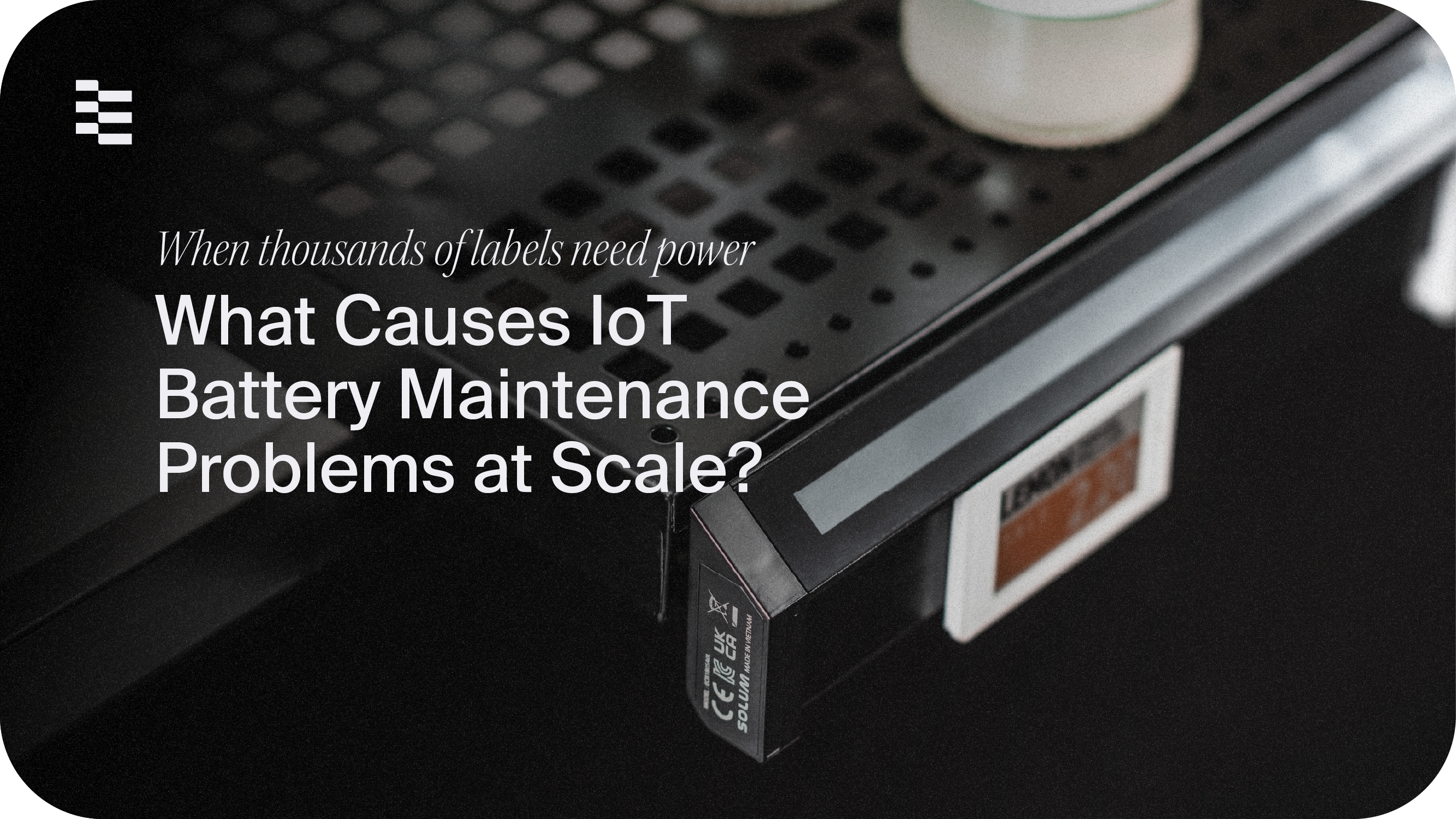
What Causes IoT Battery Maintenance Problems at Scale?
Replacing one battery is a small task. Replacing thousands is a completely different operational challenge.
At scale, battery maintenance means more than the cost of the batteries themselves. It means recurring service and maintenance costs, growing volumes of discarded batteries ending up in landfills, and the risk of devices going offline when their batteries run out. This becomes particularly clear in retail, where thousands of electronic shelf labels (ESLs) can turn a simple battery change into a large-scale maintenance challenge.
While ESLs are the focus here, the same maintenance challenges apply across IoT fleets that rely on disposable batteries.
Why Battery Maintenance Becomes a Problem at Scale
Three factors turn individual battery replacements into an ongoing operational task:
- The number of devices. Thousands of labels in each store mean thousands of future replacements. Across an entire retail chain, that number multiplies.
- On-site service Battery replacement requires service personnel to physically visit the store, locate each label, replace the battery and check that it works afterwards. The battery itself is only a small part of the job.
- Varying battery lifetimes. Differences in usage and operating conditions mean batteries do not run out at the same time, making replacements difficult to plan efficiently.
The Cost of Keeping Thousands of Devices Powered
The impact goes beyond the battery replacement itself. At scale, it creates:
- Higher operating costs. Replacement batteries, staff time, service visits and waste handling all add to the lifetime cost of an ESL installation.
- More battery waste. Every replacement creates a spent battery that needs to be collected, handled and recycled. As the number of connected devices grows, so does this waste stream.
A reliability challenge. When a battery runs out, the label can no longer perform as intended until someone replaces it. This challenge only grows with IoT. As the number of connected devices continues to increase, so does the need for reliable, maintenance-free power. Scaling IoT cannot mean scaling battery maintenance at the same time.
How Light Energy Harvesting Can Help Scale IoT
Light energy harvesting offers a different way to power connected devices. Instead of relying entirely on stored energy that eventually needs replacing, devices can capture energy from the surrounding ambient light.
For low-power electronics in retail, including electronic shelf labels (ESLs), electronic paper displays and shelf monitoring devices, light is a natural energy source. Stores already illuminate their shelves and products throughout the day, and indoor solar cells can harvest this ambient light and convert it into electricity to power these devices. Combined with energy storage, such as a supercapacitor or rechargeable battery, the device can continue operating during periods when there is little or no light.
Designing IoT for Less Maintenance
At Epishine, we develop organic indoor solar cells optimised for low-light environments. Their thin and flexible form factor makes them easy to integrate into different low-power products and shelf systems.
A typical supermarket is lit to around 1,000 lux. Our cells can start producing power at single-digit lux levels, providing a wide operating range even for lower shelves and shaded areas.
By matching the solar cell to the available light and the device's energy needs, manufacturers can reduce or eliminate routine battery replacements in suitable applications. The earlier the power source is considered in the design, the more options there are for integration.For retailers, fewer battery replacements mean fewer service visits, less battery waste and lower maintenance costs. Across thousands of devices and years of operation, just imagine the impact.
If battery maintenance is part of your product's story today, we'd be happy to discuss how light energy harvesting could change that.